Renting vs. Buying: Is the 5% Rule Still Relevant? 

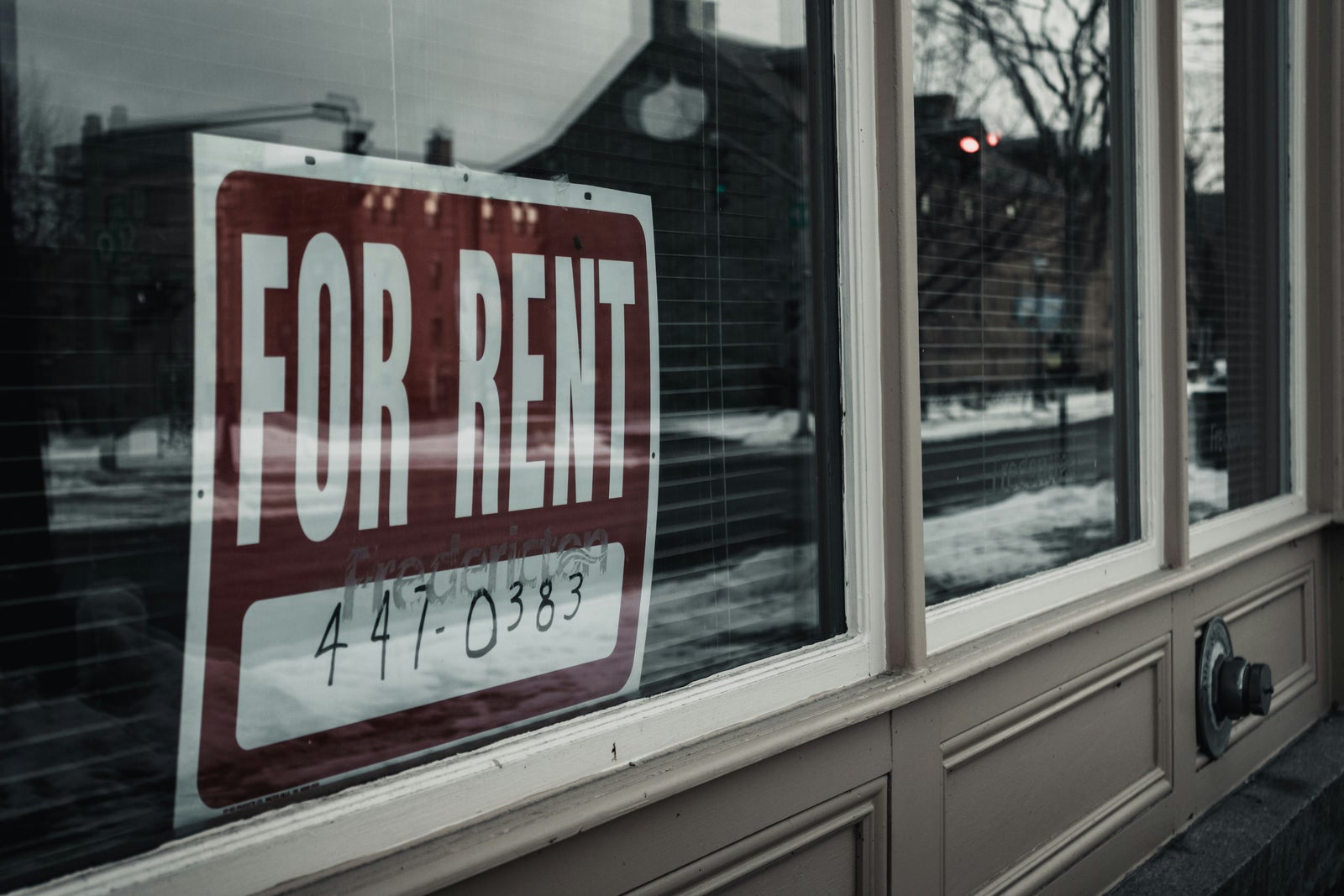
For rent sign displayed in a storefront window, representing the ongoing cost of renting a home.

Deciding to buy a home or continue to rent is a big decision that requires a thorough financial analysis. However, a simple rule of thumb called the 5% Rule is often referenced in these discussions as a tool to quickly and easily assess if buying a home would be more financially beneficial than renting. 

What Is the 5% Rule?

I first read about the 5% rule when Benjamin Felix wrote this article for PWL Capital in 2019. Here’s how it works: take the price of the home you're considering buying and multiply it by 5%. This number should roughly represent the annual costs of owning that home. If the yearly rent of a comparable home is less than this, renting might be the better financial decision. Felix uses a mortgage rate of 3% in his calculation to determine the 5% Rule. On June 5th, the Bank of Canada reduced the overnight rate to 4.75%, but 4.75% is still a long way off from 3%, leading to the question: is the 5% Rule still relevant? To determine this, let’s dive into the 5% Rule, whether it still makes sense, and if not, what a new rule of thumb might be.

Typically, potential homeowners will compare their monthly rent payment with the monthly mortgage payment to determine which option is less expensive. This method is flawed because a rent payment is 100% unrecoverable, whereas a mortgage is not. Instead, the 5% Rule attempts to help people compare the rent payment to the total unrecoverable costs of owning. The unrecoverable costs of homeownership are broken down like this:

Breaking Down the Cost of Homeownership

1% Property tax + 1% Home maintenance + 3% Cost of Capital (mortgage interest + opportunity costs) = 5%

The 1% property tax and 1% home maintenance are pretty straightforward. The remaining 3% cost of capital is broken down into two components: first, your mortgage interest. This calculation assumes a 20% down payment and a 3% mortgage rate so that means 80% of the purchase of the home would be paid for with 3% financing, 80 x 0.03 = 2.4%. The other component is what Felix calls “the cost of opportunities lost” which is the difference in expected returns on real estate vs. the stock market. Essentially, it accounts for money you would have earned if you had bought stocks with your down payment instead of buying real estate. This calculation assumes 0.6%:

2.4% mortgage interest + 0.6% opportunities cost = 3%
Savings jar labelled House Fund

Does the 5% Rule Still Work Today?

But the days of 3% mortgages are in the past. Considering the latest Bank of Canada rate decrease, let’s assume a mortgage rate of 4.75%. If we keep the same 20% down payment, the remaining 80% of the purchase of the home today would cost 3.8% and if we apply the same opportunities 0.6% cost to our down payment, we are now at 4.4% for the total cost of capital:

1% Property tax + 1% Home maintenance + 4.4% Cost of capital (mortgage interest + opportunity costs) = 6.4%

A Real-World Example

Let’s look at an example. If we were considering the purchase of a $500,000 home, the unrecoverable costs of owning this home (6.4%) work out to $32,000/year or $2,667/month. If your rent is less than $2,667, renting may be the better option.
For rent sign displayed in a storefront window, representing the ongoing cost of renting a home.

The Limitations of the 5% Rule

While the 5% Rule (or 6.4% Rule) is a great way to quickly assess the cost of renting vs. buying, it’s an oversimplification for sure. There are a lot of limitations to this rule that need to be kept in mind. For starters, the opportunity costs are calculated using global returns on both real estate and stocks. Canadians aren’t investing in global real estate, they are investing in Canadian real estate and in the Lower Mainland, the average growth of real estate far outpaces global growth rates. It also doesn’t take into consideration tax rates or portfolio asset mix. But regardless of it’s limitations, pinning down the unrecoverable costs of home ownership will help you make a more accurate assessment when weighing the financial benefits of renting vs. buying. If you have any questions about the benefits of renting vs. buying or want to discuss your options further, please reach out to me!

Frequently Asked Questions

What is the 5% Rule for renting vs. buying?

The 5% Rule is a guideline developed by portfolio manager Benjamin Felix to help compare the cost of renting versus buying a home. The rule estimates that the annual unrecoverable costs of homeownership are roughly 5% of a home's value, including property taxes, maintenance, mortgage interest, and opportunity costs.

Is the 5% Rule still relevant in Canada?

The 5% Rule remains a useful starting point, but it was developed when mortgage rates were much lower than they are today. As interest rates rise or fall, the cost of homeownership changes. For many buyers, a higher percentage may provide a more realistic comparison than the original 5% calculation.

Is it cheaper to rent or buy a home in British Columbia?

There is no one-size-fits-all answer. The cost of renting versus buying depends on home prices, rental rates, mortgage rates, property taxes, maintenance costs, and how long you plan to stay in the home. In some situations renting may be cheaper, while in others buying may provide greater long-term financial benefits.

What are the hidden costs of home ownership in Canada?

Many buyers focus on the mortgage payment but overlook other ownership costs. These can include property taxes, home insurance, maintenance and repairs, strata fees, special levies, utilities, legal fees, moving expenses, and closing costs. These expenses should be factored into any rent-versus-buy comparison.

What is the opportunity cost of buying a home?

Opportunity cost refers to the potential investment returns you give up when using your down payment to purchase a home instead of investing that money elsewhere. The 5% Rule includes an estimate of this cost as part of the overall expense of homeownership.

Should I compare rent to a mortgage payment?

Not on its own. Comparing rent to a mortgage payment can be misleading because a mortgage payment is only one part of the cost of owning a home. Property taxes, maintenance, insurance, and other expenses should also be included when evaluating whether renting or buying makes more financial sense.

How do mortgage rates affect the rent-versus-buy decision?

Mortgage rates have a significant impact on affordability. Higher rates increase borrowing costs and monthly payments, while lower rates reduce them. Changes in mortgage rates can dramatically alter the financial comparison between renting and buying.

Does buying a home build equity?

Yes. As you pay down your mortgage, you build equity in your home. Equity is the portion of the property that you own outright and can increase over time through both mortgage repayment and appreciation in the home's value.

Stay in the know! Get hot topics + monthly market updates straight to your inbox.

* indicates required